The gap isn't creative. It's operational. Here's what closing it actually looks like.
Every brand leader we talk to says some version of the same thing:
"We know what kind of content we need. We know where we need to be. We just can't get there fast enough."
The content strategy is fine. The brand guidelines exist. The briefs are written. But somewhere between "we should do this" and "this is live and performing," something breaks.
That break point is almost never creative. It's operational.
Getting everyone to the same spot, at the same time, on the same page, from the freelancers hired, to the shot list, and the audio set up, sometimes the logistics in real life are just way too overwhelming to actually get anything kicked off.
And that's just the pre-production.
Post-production? Well, you better have your storage, organization, and editing plans in place. Otherwise all that footage you invested your time in creating sits in a folder or on an SD card forever.
And it's a problem the industry has been slow to solve. Until now.
The numbers are stark. Brands are publishing 400% more content than they were five years ago because visual video and photo content communicates everything online. In social apps, using video as a marketing channel, the algorithms reward consistency and volume. And when it comes to events, IRL moments online depend on speed, speed, speed.
Then, multi-location brands are expected to maintain a local presence everywhere they operate.
Short-form video has moved from optional to table stakes for brands in hospitality, real estate, and retail.
Meanwhile, production infrastructure hasn't kept pace.
The average marketing team is still relying on a patchwork of freelance relationships, vendors, agency retainers, and in-house capacity. This is a system built for a world where "quarterly campaign" was the unit of content work. That world is gone. The unit now is "this week's posts across twelve markets."
Here's what the operations gap actually looks like in practice:
It looks like a great brief that sits for two weeks while the team figures out who's shooting in that city, whether they're available, whether they can match the visual style, and whether the budget works.
It looks like inconsistent quality across markets: the Chicago location looks polished, the Dallas one looks like a different brand entirely, and no one has the bandwidth to fix it before it goes live.
It looks like production spend that's impossible to track. You know roughly what you spent on content this quarter. You have no idea what you got for it in terms of cost per asset, turnaround efficiency, or output-to-campaign ratio.
It looks like a team that's good at marketing being buried in logistics, vendor management, and revision cycles instead of thinking about strategy and creativity.
This is the ops gap. And most brands have quietly accepted it as the cost of doing content at scale.
The brands that are winning on content show up consistently, look great across markets, and scale without breaking. They didn't have a magic pill to solve creative problems. They figured out how to operationally structure it into their business set up.
They've moved from a project model to a platform model.
In a project model, every piece of content is a discrete effort. Find the creator, negotiate the scope, brief, shoot, review, revise, deliver. Repeat from scratch next time. This model doesn't scale. It's expensive in time, inconsistent in output, and impossible to report on meaningfully.
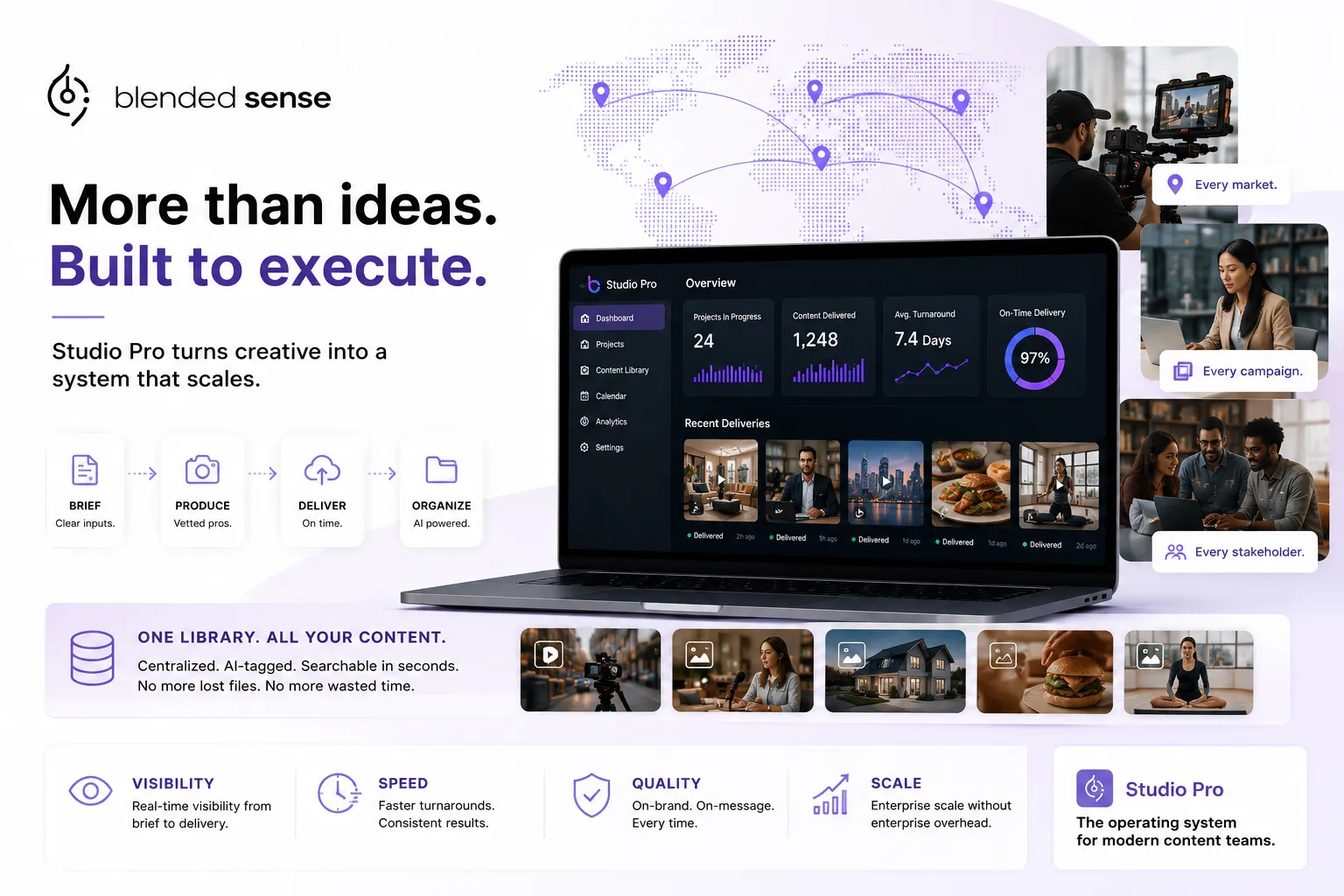
In a platform model, production is a system. Creators are vetted and matched, not hunted. Briefs have a home. Revisions have a workflow. Timelines are tracked. Quality is maintained by design, not by luck. And the data follows every deliverable, so you can actually see what your investment is producing.
The brands making this shift are getting more content, faster, at lower cost, all without adding headcount or sacrificing quality.
For brand and comms leaders, the strategic question isn't whether to move to a platform model for content production. It's how quickly you can get there before the gap between you and competitors who already have becomes a real problem.
The brands that figure this out first don't just get better content. They get a compounding advantage: more content in more markets means more data on what works, which improves future briefs, which raises quality, which builds audience trust, which drives performance.
Content production efficiency isn't a back-office optimization.
It is your competitive moat.
Create your Studio account and start ordering the content your brand needs, anytime, anywhere.
Create your account →
Business
If you're relying solely on a content calendar to drive your video marketing, you're not alone, but you are leaving opportunity on the table.
content-calendar-isnt-a-business-strategy
Business
Written content used to build trust first. Now video does, and treating it as a nice-to-have means your business is already behind.
video-is-first

Business
Finding a talented videographer isn't the hard part anymore. Finding one you can actually depend on is.
5-problems-scaling-with-freelance-creators